Our Blog

online casino apple pay paysafe casino casino bonus kaszinó gyors kifizetéseket ezeewallet casino jeton wallet casino casinos online dinheiro de verdade casinos com transferencia bancaria jogos de casino para ganhar dinheiro real deposit with paypal casino bezahlen per handyrechnung top klarna casino online casino echeck deposit casino lastschrift kaszinó bónuszok ethereum casino mobil kaszinó magyar casinos with no wagering requirements casinoer med paysafecard no wagering requirements casino casinos com paypal ezeewallet casino kasyno za prawdziwe pieniądze bitcoin casino ohne verifizierung mastercard pagamentos casino online kaszinó paypal kasyno online na pieniądze bitcoin casino bonus best zimpler casino sites online casino mit rapid transfer polskie kasyno online idebit accepted casino online casino mit google pay einzahlen mastercard casinos online neteller casino casino online neteller online casino ohne verifizierung österreich novo casino online portugal astropay casino bedste bankoverførsel casino online casino with zimpler kasyno ezeeWallet casino na prawdziwe pieniadze best paypal casino kasynos online online kaszinó bónusz automaty online bez rejestracji ios casinos zimpler casino sites danske online casino najlepsze polskie kasyno depósito de casino com mbway

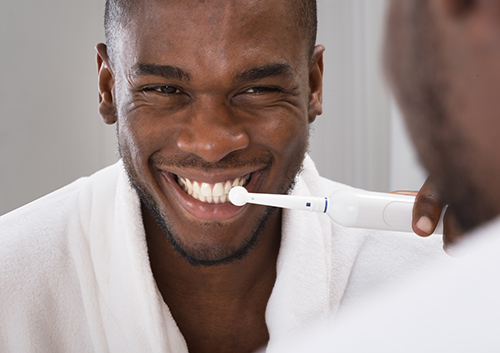
Electric Toothbrushes vs. Regular Toothbrushes

Convertible or sedan? Downtown or suburbs? Electric or manual toothbrush? As life decisions go, it’s certainly not choosing your next car, or deciding where you want to live. But, even when you are selecting a toothbrush, it helps to make a list of the pros and cons of the contenders before you make that final selection.

  • Efficiency

The most important factor in choosing a toothbrush is finding out which model works best to eliminate bacteria and plaque. And studies have shown that, used properly, both electric and manual toothbrushes do a great job of removing plaque. Some electric models can reach the backs of teeth and the gumline more easily, some manual head designs work better for your individual mouth and teeth, so your particular needs should dictate which style of toothbrush you use. Talk to us about the best methods to brush with your preferred toothbrush, and we’ll let you know if one type of toothbrush or the other might work better for you.

  • Health Considerations

Brushing too energetically can actually harm teeth and gums, causing sensitivity and damage to the enamel and gum tissue. An electric toothbrush should provide a continuous brushing motion without needing any pressure from the brusher. This might be the model for you if you have a too-vigorous approach to brushing, or sensitive teeth and gums.

An electric toothbrush can also be more efficient for older and younger brushers, those with limited mobility, and those with health conditions or injuries that make brushing with a regular toothbrush more difficult.

  • Cost

An electric toothbrush is not a one-time investment. You should change the removable head as often as you change your manual toothbrush (every three to four months, please). But this cost is offset if an electric toothbrush is more efficient in removing your plaque, easier to use, or even if you just prefer it to manual brushing. If you find that you brush better and more often with an electric toothbrush, the added expense is well worth it.

Whichever brush you decide on, the most important part of the brush is the person holding it! A regular appointment with your toothbrush for two minutes of thorough brushing in the morning and two in the evening, daily flossing, and regular visits to our office for checkups and cleanings will keep your teeth healthy and strong no matter which toothbrush you choose.

Questions about your toothbrush choices? Don’t hesitate to ask Christopher Cosse at our Shreveport, Louisiana office.


Foods can Wreak Havoc on Your Enamel

It’s possible to develop tooth decay even when you take great care of your teeth. Brushing and flossing may not be enough to keep your teeth healthy, depending on your diet. Cavities, discoloration, and decay are still possible when certain foods feature in your daily intake. Keep an eye out for foods that will damage your enamel and cause the very issues you’ve been trying to avoid.

What causes enamel damage?

Tooth enamel is the hard outer layer of your teeth that is made of various minerals. Tooth decay results when the acids in your food react with the minerals in your enamel. Strongly pigmented foods may also cause unsightly discoloration on the surface of your teeth. Avoid wreaking havoc on your beautiful smile by identifying the foods that can harm your enamel.

Acid

Acidic food is your teeth’s worst nightmare! This is the greatest cause of enamel damage, even if you brush and floss regularly. To avoid damaging your teeth, make sure you can determine whether a food is acidic or not.

The pH levels are a way to determine acidity on a one-to-seven scale. This defines the relative acidity or alkalinity of a food or substance. Foods with high pH levels are not as likely to harm your enamel.

It’s wise to avoid or minimize foods that are high in acids. Highly acidic food can include fruits such as lemons, grapefruit, strawberries, grapes, and apples. Moderately acid foods may surprise you; they include tomatoes, maple syrup, pickles, and honey.

Not surprisingly, eggs and dairy products such as milk and cheese contain the least amount of acid. Red wine and coffee can also discolor your enamel if they’re drunk in excessive amounts.

What can I do to prevent enamel damage?

There are plenty of ways to avoid discoloration and decay of your enamel. The best thing to do is limit the amount of high-acid foods, including sugary juices and soda, in your diet.

Another way is to brush and floss regularly, an hour after each meal. If you can’t make time to brush, an easy solution is to swish your mouth with water or mouthwash to rinse away any leftover acidic particles.

Damaged tooth enamel may be common, but is avoidable when you know which foods to stay away from and the steps to take after you do eat highly acidic foods. Take our advice and you’ll be sure to slow down any future discoloration and decay that happens in your mouth.

For more advice on protecting your enamel, give our Shreveport, Louisiana a call to learn more!

At what age should my child have an orthodontic evaluation?

You may have noticed that kids seem to be getting braces and other orthodontic care a lot earlier these days. There was a time, only a decade or two ago, when braces were mainly seen on teenagers, but that is beginning to change. If you’re wondering when to bring your child to our Shreveport, Louisiana office for an orthodontic evaluation, the answer actually has several parts.

The Telltale Signs

If your child has a very crowded set of adult teeth coming in, or if the permanent front teeth came in very early, these are signs that your child should see Christopher Cosse, regardless of age.

The Dental Age

Barring signs of trouble or early adult teeth as mentioned above, the time that your child needs to be seen for initial orthodontic evaluation depends not so much upon your child’s actual age, but on what is known as a “dental age.”

The dental age of the patient might be entirely different from his or her actual chronological age; for example, an eight-year-old could have a dental age of 13. It is part of Christopher Cosse and our staff’s job to determine the dental age and then make appropriate recommendations for the resolution of orthodontic issues if they are emerging.

The Official Recommended Age

The American Association of Orthodontists officially recommends that kids should see an orthodontist for the first time between the ages of seven and nine. Even if the child does not have all his or her permanent teeth, the teeth growth pattern can usually be predicted quite effectively by an orthodontist.

This allows for a proactive response to emerging problems, and this is the reason that some younger children are now getting orthodontic devices earlier in life. If a young child has serious orthodontic issues emerging, Christopher Cosse can usually address the problems immediately and then follow up with another round of treatment when the child has all the adult teeth.

The Origins of Valentine’s Day

When we think of Valentine’s Day, we think of cards, flowers, and chocolates. We think of girlfriends celebrating being single together and couples celebrating their relationship. We think of all things pink and red taking over every pharmacy and grocery store imaginable. But what Christopher Cosse and our team would like to think of is when and how this joyous, love-filled day began.

Several martyrs’ stories are associated with the origins of Valentine’s Day. One of the most widely known suggests that Valentine was a Roman priest who went against the law at a time when marriage had been banned for young men. He continued to perform marriage ceremonies for young lovers in secret and when he was discovered, he was sentenced to death.

Another tale claims that Valentine was killed for helping Christians escape from Roman prisons. Yet another says that Valentine himself sent the first valentine when he fell in love with a girl and sent her a letter and signed it, “From your Valentine.”

Other claims suggest that it all began when Geoffrey Chaucer, an Englishman often referred to as the father of English literature, wrote a poem that was the first to connect St. Valentine to romance. From there, it evolved into a day when lovers would express their feelings for each other. Cue the flowers, sweets, and cards!

Regardless of where the holiday came from, these stories all have one thing in common: They celebrate the love we are capable of as human beings. And though that’s largely in a romantic spirit these days, it doesn’t have to be. You could celebrate love for a sister, a friend, a parent, even a pet.

We hope all our patients know how much we love them! Wishing you all a very happy Valentine’s Day from the team at Cosse & Silmon Orthodontics!